

How Does Car Shipping Work? A Step-by-Step Guide to Shipping Your Car
Let’s say you have a car that needs to travel a couple thousand miles, or maybe it doesn’t even run anymore, and driving it there yourself isn’t an option. That’s where the car shipping process comes in; a carrier truck handles the work while you go about your week.
Here’s what nobody tells first-time shippers trying to figure out how to ship a car: it’s not actually complicated. It just looks that way from the outside. This car shipping guide breaks down exactly how car shipping works at each stage: quote, booking, carrier match, prep, pickup, transit, and delivery.
One thing worth knowing upfront about the car transport process: think “window,” not “appointment.” Stick with us; we’ll walk through all the steps and answer your question: how does car shipping work?
What Is Car Shipping and How Does It Work?
Car shipping, auto transport, vehicle transport; call it what you like. It comes down to the same idea: your car travels by truck instead of you sitting behind the wheel for twelve hours straight watching the miles crawl by.
Two players usually run the show. The transport company coordinates your shipment, quotes the job, and answers your calls when something changes. The carrier is the outfit, or occasionally an independent owner-operator, that physically loads your vehicle and hauls it down the highway. It’s worth knowing the difference, since it tells you who to call when a question comes up: the company for scheduling and billing questions or the driver for anything happening in real time on the road.
Most shipments run door-to-door, meaning the truck gets as close to your address as it physically can. But an 80-foot car hauler can’t squeeze down a narrow cul-de-sac or into a low-clearance garage, so the exact pickup and drop-off point sometimes shifts depending on your street, your neighborhood, and who’s driving that day. If you live somewhere with tight streets, ask ahead of time whether a nearby parking lot might work better than your actual address.
Step 1: Get a Car Shipping Quote
What information do you need for a quote?
Getting an accurate quote is a bit like ordering a tailored suit: the more precise your measurements, the better it fits. You’ll need your pickup and destination; the vehicle’s make, model, year, and condition; your timeframe; whether you want open or enclosed; whether it runs; and any modifications worth mentioning.
Skip a detail- say, forget the lift kit on your truck- and don’t be shocked when the price shifts once the carrier actually sees it. A quote’s only as good as what you tell them going in.
What affects the cost of shipping a car?
Distance is the biggest factor, but there are other considerations. A full-size truck eats more trailer space than a sedan, so size matters too. Open versus enclosed changes the math, and so does how far ahead you book and the time of year. Snowbird season, for instance, pushes prices up on the Northeast-to-Florida run; everybody’s chasing the same trucks at once.
As a 2026 benchmark, the national average is around $1,200, with per-mile rates ranging from $0.33 to $2.00 depending on distance; shorter trips cost more per mile because fixed costs are spread across fewer miles. Rates have crept up 3 to 8 percent year over year too, with fuel and insurance mostly to blame.
And the cheapest number on the page isn’t always the smart pick. Occasionally it’s a bargain in disguise for an inexperienced broker or an uninsured carrier, or a price that creeps up once you’re already committed.
Step 2: Choose the Right Car Shipping Service
Open car transport
Picture the double-decker trailers hauling five or ten cars down the interstate, the same rigs delivering new cars to dealership lots. Open transport covers roughly 85 to 93 percent of interstate shipments, mostly because it’s cheaper and more available. The catch is your car rides exposed the whole way, the same as if you’d driven it yourself.
Enclosed car transport
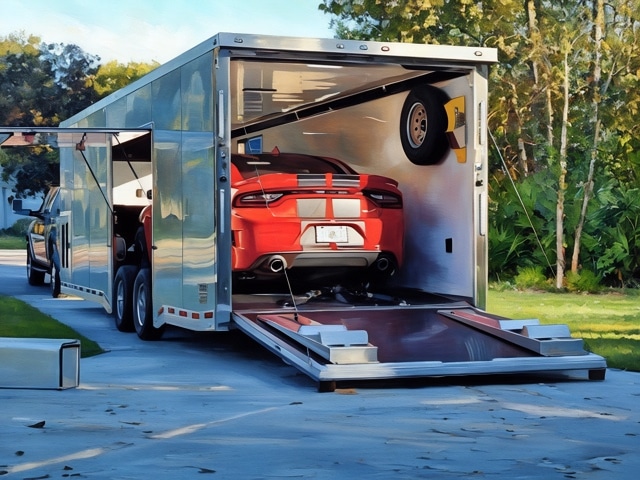
Now picture that same vehicle tucked inside a fully covered trailer: no rain, no road debris, and no strangers gawking at a rest stop. That’s enclosed transport, usually reserved for classics, luxury cars, or anything where a rock chip is actual money lost, not just cosmetic. Fewer vehicles fit per trailer, hence the 30 to 60 percent premium over open transport.
Door-to-door vs. terminal-to-terminal transport
Door-to-door means the carrier pulls up as close to your place as an 80-foot truck can manage, which is why most people prefer it. Terminal-to-terminal means dropping off and picking up at a facility instead, usually because your street’s too narrow or the gate won’t open for something that size. Either way, just make sure it’s somewhere a big rig can reach safely and legally.
Step 3: Book Your Car Shipment
Once you accept a quote, the transport company locks in the details and timeframe and sends confirmation. Before signing off, actually read the pricing, pickup and delivery expectations, cancellation policy, and what’s covered by insurance. Not the fun part, but the part that saves you a headache later.
This is also where a company like Preowned Auto Logistics (PAL) earns its keep, quietly coordinating everything and keeping you in the loop from booking through delivery.
Step 4: Carrier Assignment and Scheduling
Your shipment is handed to a carrier who knows the route, has the right equipment, and has enough miles on that corridor to do it properly. Double-check that the carrier is licensed and insured; that’s what protects you if something goes wrong.
Expect a window, not an exact appointment. Traffic, weather, or whatever happened at the driver’s last stop- any of it can push things back, so stay near your phone once the window opens. A driver running late needs to reach you fast, or you risk getting bumped to the back of the schedule.
Step 5: Prepare Your Car for Transport
Wash the car before pickup day; dirt hides scratches, and a clean surface makes it easier for both you and the driver to spot what’s already there. Snap photos from every angle, including any damage, and keep them separate from any paperwork that ends up with the driver.
Clear out valuables too. Most carriers don’t want personal items left inside, and loose items just slide around and bang up the interior.
Follow whatever fuel guidance the carrier gives you, usually a quarter tank or less, and make sure tires are aired up with no leaks. If the car doesn’t run, that changes the loading process, so let us know when you book, not when the driver’s standing there needing a winch.
Fold antennas down, tie down anything loose, and pull your toll transponder before it racks up charges on someone else’s truck. Got aftermarket parts? Mention them now. Nobody likes surprises, least of all the guy loading your car.
Step 6: Vehicle Pickup and Inspection
When the truck rolls up, you and the driver walk the car together and confirm everything matches, then do a joint inspection before loading. This is where the Bill of Lading comes in, a snapshot of the car’s condition right before it goes on. Take your time reading it. Anything missed here is a lot harder to argue about once the truck’s gone.
Step 7: Your Car Is Transported to the Destination
Once loaded, your car is riding on somebody else’s timeline. Carriers often cover long distances over several days, sometimes swinging by to pick up or drop off other vehicles, and, depending on your service, you might get the odd tracking update.
Treat transit time as a rough estimate, not a promise. Weather, traffic, road closures, or a mechanical issue can push the timeline around, so keep your phone charged and check in if you haven’t heard anything in a while.
Step 8: Vehicle Delivery and Final Inspection
As delivery gets close, the carrier coordinates a time and place with you- again, a window, not a precise hour. Before signing anything, walk the car and compare it against the original Bill of Lading. If something’s new, document it right then, not after the truck’s three states away. Confirm that your keys and anything else that came with the car have been returned before you sign off.
What is a Bill of Lading for Car Shipping?
Think of it as your shipment’s paper trail: vehicle condition, pickup and delivery details, and transport information, all in a single record that both parties sign off on. It protects you and the carrier equally, so review it at both ends of the trip and keep your copy somewhere safe. If a dispute ever comes up about damage, this document is usually what settles it, which is precisely why skimming it defeats the purpose.
How Long Does Car Shipping Take?
Ask ten people, and you’ll get ten answers, since transit time depends on total distance, route popularity, weather, traffic, and seasonal demand. It helps to separate three clocks: the pickup window, the transit time, and the delivery window; each one can move independently of the others. Carriers typically average 400 to 500 miles per day, and pickup scheduling alone can add 1 to 5 extra days during busy stretches like summer or the holidays. Don’t count on a guaranteed delivery date unless your service explicitly promises one in writing.
Is Car Shipping Safe?
Handing your car to a professional carrier reduces the wear and risk of driving it yourself over hundreds or thousands of miles of unfamiliar roads. But safety comes down to who you trust with the vehicle, not the process itself. Pick a properly registered and insured provider, look into its reviews and track record, and remember that the inspection process and Bill of Lading exist to protect both sides if something does go wrong. Clear communication throughout is usually the clearest sign you picked the right team.
What Can You Expect to Pay for Car Shipping?
As a 2026 benchmark, standard open-transport shipments typically run $700 to $1,500, with cross-country routes landing around $1,300 to $1,700, and enclosed transport adds another 30 to 60 percent on top of that baseline.
Quotes vary between companies for legitimate reasons; different networks, service levels, and overhead all play into it. Don’t pick a provider purely because the number is the smallest on the page. Weigh service quality, reliability, insurance, and communication instead; the sticker price only tells part of the story, and the cheapest option sometimes costs more in the end.
Common Car Shipping Mistakes to Avoid
Most shipping headaches trace back to the same handful of slip-ups. People chase the lowest number on the page and end up regretting it once problems start. Others wait until the week before they need to move, then scramble to find someone available, which limits their options and usually drives the price up anyway. Some guess at vehicle details instead of double-checking them, which throws off the quote and causes friction later at pickup.
Then there’s the stuff people just forget: leaving a phone charger or a gym bag in the back seat, skipping photos before pickup, not actually reading the Bill of Lading because it looks like boilerplate. It isn’t. Folks also tend to assume pickup or delivery will happen right on the dot, and when it doesn’t, they’re caught off guard instead of just expecting a window from the start. A little research into the transport company’s track record before booking heads off most of these problems entirely, and it takes maybe twenty minutes.
Car Shipping Checklist for First-Time Shippers
Before booking, compare a few reputable providers rather than settling for the first quote you get, and confirm that your vehicle and route details are accurate, down to the trim level if it matters. Decide between open and enclosed based on what you’re actually shipping, not just on price alone.
Before pickup, clear out personal belongings, photograph any existing damage from multiple angles, and get the car road-ready per your carrier’s specific instructions, since these can vary slightly between companies.
On pickup day, slow down long enough to actually read the Bill of Lading rather than skimming it and signing on autopilot.
During transit, stay reachable and watch for any updates from the transport company.
At delivery, give the car a proper once-over before signing anything, and flag any new damage on the spot rather than waiting until after the driver has already left, when it becomes your word against no one’s.

Frequently Asked Questions About How Car Shipping Works
How does car shipping work step by step?
The car shipping process involves several steps: obtaining a quote, choosing a service, booking the shipment, assigning a carrier, preparing the vehicle, arranging pickup with a documented inspection, transporting it, and conducting a final inspection upon delivery.
How do I ship a car across the country?
Same process, longer distance. Get a quote for your route, book with a provider you trust, prep the car, and stay reachable for pickup and delivery on both ends.
How long does it take to ship a car?
It depends on distance, route conditions, weather, and carrier availability, which is exactly why reputable providers quote timeframes instead of exact dates.
Is it better to use open or enclosed car transport?
Open transport handles everyday driving well and keeps costs down. Enclosed transport’s extra protection suits classics, luxury vehicles, and anything with real collector value where the added cost is worth it.
Can I ship an inoperable vehicle?
Yes, though it requires specialized loading equipment, such as a winch. Disclose the condition up front so the carrier arrives prepared, rather than finding out on pickup day.
Can I put personal items in my car when shipping it?
Restrictions vary by company, so check your provider’s specific policy before packing anything in, since some allow a small amount in the trunk and others don’t.
What happens if my car is damaged during transport?
Document it immediately, compare it against the Bill of Lading from pickup, and contact your provider right away to start resolving it while details are still fresh.
Do I need to be present when my car is picked up or delivered?
Not necessarily. An authorized representative can often step in on your behalf, depending on your provider’s requirements, as long as they can sign the paperwork.
Final Takeaway: Understanding the Car Shipping Process
Car shipping isn’t the mystery box it seems from the outside. Quote, service selection, booking, carrier assignment, prep, pickup, transit, delivery: eight steps, each predictable once you know it’s coming, and none of them require you to be an expert going in.
What separates a smooth shipment from a stressful one usually isn’t luck. It’s preparation, documentation, honest communication, and picking a provider you trust over one that’s simply cheap. The people who have a good experience are usually the ones who read the fine print and ask questions upfront, not the ones who got lucky.
When you’re ready to get your car moving, Preowned Auto Logistics is happy to walk you through a quote and make the whole trip, pickup to delivery, feel as easy as it should.