

Disputing Damages: The Role of the Bill of Lading in Auto Transport Claims
What is the most critical document you will come across out of all the paperwork needed to ship your vehicle? Yes, you are correct if your answer was the Bill of Lading. In the case of an Auto Transport, damages are rare but still possible. When this happens, the one piece of paper, which is usually just a receipt, turns into the most valuable evidence of your claim.
A BOL is the first and foremost official, legal record of your vehicle before and after the transport. It is the agreement between the two parties, both literally and figuratively, printed on a piece of paper that safeguards the customer and the company as well. Nevertheless, some customers, due to their overexcitement about receiving the keys, tend to overlook the final check and quickly sign the BOL. Not having checked the BOL thoroughly can make damage claims turn into a long, exhausting fight when the road is not straight.
Knowing how the Bill of Lading interacts with the auto transport claims process is more than just good practice; it’s vital for investment protection. This guide will clarify the purpose of the BOL, describe its indispensable role in settling conflicts, and tell you how Preowned Auto Logistics is committed to transparency, which is the reason behind every claim being resolved in a fair and timely manner.
What Is a Bill of Lading and Why Does It Matter in Claims
Consider the Bill of Lading as your car’s passport for the shipping journey. It is definitely not just a simple receipt, but a complex document that performs three main functions:
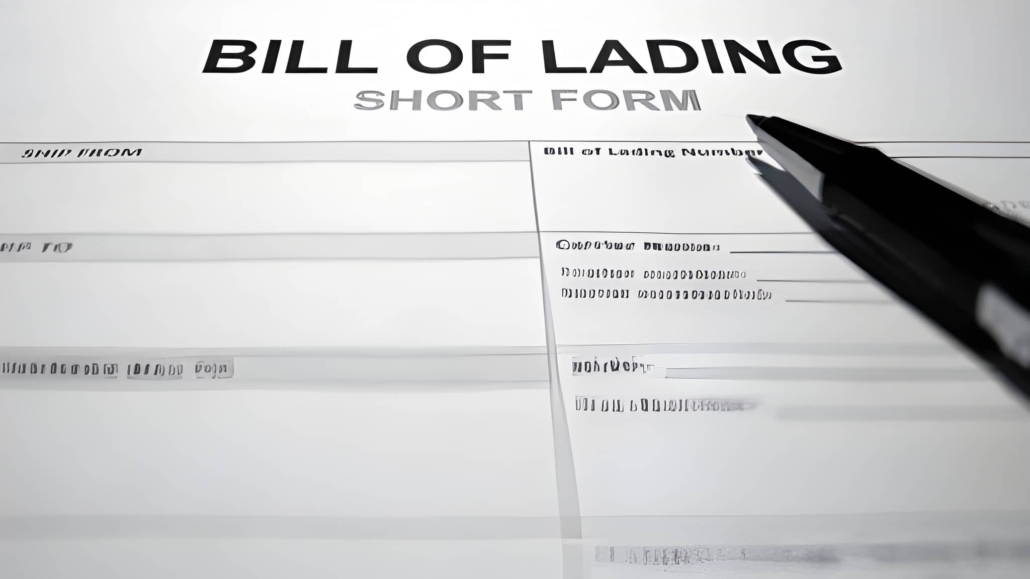
- Contract of carriage: The BOL acts as a legal instrument that specifies in detail the agreement terms between you, the shipper, and the carrier. It contains the necessary data about the pickup and delivery locations, the parties’ names, as well as the vehicle information (make, model, VIN), and the transportation terms agreed upon.
- A receipt of goods: The carrier driver signing the BOL at the time of the pickup acknowledges that the carrier has taken possession of the vehicle. Likewise, at the delivery, signing the document means confirming the receipt of the vehicle.
- Condition report: In the case of a vehicle shipping damage claim, this is probably the most essential function. The BOL features a standard vehicle diagram on which, during the local check at the time of the driver’s arrival, the driver indicates any pre-existing damage, scratches, dents, chips, or scuffs. In this way, the official “before” snapshot of the vehicle’s condition is created.
How the Bill of Lading Protects Both Parties
One of the best things about a car transport bill of lading is that it is fair and creates an accountable environment for everyone involved in the transaction.
For the carrier: a shield against unfair claims
Assuming a carrier is to load a car with a few minor dents on one of the doors and a scuff on the bumper. If these damages are not recorded on the BOL, the customer may claim that such damages were caused during the transport, and thus, they may hold the carrier responsible for pre-existing wear and tear.
The BOL helps the carrier by establishing a truthful record of the vehicle that is unloaded on the truck. Thus, when the customer signs the BOL at pickup, they confirm the correctness of the damages. This paperwork discourages fraud attempts and assures that, in the case of carriers, they are only to be held responsible for damages that happen under their care. It is the proof of the vehicle’s initial state.
For you, the customer: your insurance policy
On the other hand, the BOL is your most defensible instrument. For instance, when your car is in perfect condition at pickup and the BOL shows this fact, no marks, no scratches. So if the vehicle shows up with a new dent in the door or a long scratch along the side, then the BOL is your evidence.
By having a clean pickup report and comparing it with the condition at delivery, you can unequivocally prove that the damage must have occurred during transport. The BOL is the one that supports your court, as well as the carrier’s liability. It avoids setting up your claim as an accusation, but rather, it’s a documented fact.
This piece of auto shipping documentation is the foundation upon which any successful dispute of vehicle shipping damages is built, ensuring you are compensated for any legitimate harm to your property.
The Inspection Process: When and Why It Matters
The Bill of Lading is the most important document of your shipment, and it depends on the two inspections: pickup and delivery. If you want to protect yourself completely, it is necessary that you take part in both of them.
The pickup inspection: setting the baseline
The first official and thorough step of the driver when they come to pick up your vehicle is the inspection. The driver and you or your representative will check the car thoroughly, going around it. And they will be looking for any kind of damage or imperfection on the panels, windows, or any surface of the vehicle.
What they look for:
- Scratches
- dents
- dings
- rock chips
- scuff
- broken glass
or any other visible damage.
How it’s recorded: The driver will utilize a coding system (e.g., “S” for scratch, “D” for dent) to indicate the place and the severity of each imperfection on the vehicle diagram on the BOL.
Your role
You have to be with the driver, observe them, and judge whether the inspection is correct or not. If something is left out, do not hesitate to point it out and, if you think a certain shorthand is wrong, ask for an explanation. This is the only time you have to set the condition officially.
The Delivery Inspection: The Moment of Truth
Once you come to your destination, do the same process, but this time, look for differences. Do not sign anything until you take your copy of the pickup BOL and make a side, by, side comparison.
- Walk around the car once more: With the pickup BOL in hand, check the same areas that were pointed out before and see if there are any new marks.
- Search for new damage: Are there any scratches that were not in the original report? Is there a new dent in a panel that was previously clean?
- Identify discrepancies right on the BOL: In case you discover new, unrecorded damage, it is utmost vital that you indicate it on the delivery BOL before signing. Be precise. For instance, put “6-inch scratch on the driver’s side door” or “Dent on front right fender.”
- Sign only after recording: Your signature on the final BOL is a sign of your agreement to the vehicle’s condition. If you sign a clean BOL (without new damage noted), then you are making a legal statement that the car was delivered in good condition, which can, therefore, make it very challenging to make a successful claim later.
That final check is the moment when any potential problems that you want to be addressed must be formally recorded.
Missteps That Complicate Damage Claims
The Bill of Lading system is highly beneficial, but simple errors can still put your claim filing in danger. It is necessary to stay away from these common mistakes.
- Blindly signing: By signing without noting that the goods are damaged, you lose your right to say that the damage occurred on the way. Always doing things at the proper time is a rule of thumb.
- Not saving your copy: The BOL you get during pickup is the very first document that proves your case. In the event of misplacing it, you do not have a starting point for comparison from delivery. Keep your copy in a safe place, but make sure you can easily get it when your vehicle arrives.
- Not being there (and sending an unaware person): When you can’t be at the loading or unloading, let the person that you choose well understand the inspection process. They should be aware of what to check and how important it is to sign the BOL. An uninformed friend or relative can unintentionally sign a damage-free report for a vehicle that is actually damaged.
- The damage report was delayed: Usually, carriers set a deadline that is very short and close to the time of delivery, within which you carry a formal claim. The act of leaving the damage report for a few days after it happened on the BOL of the delivery gives the company the right to reject the claim. Do your part immediately.
How to File a Damage Claim Using the BOL
If new damage is found during the delivery inspection, do not panic. The Bill of Lading clearly outlines the claim filing process. Take these steps one by one.
Step 1: Inspect, and if you find damage, write it on the bill at delivery
It is the most crucial step. New damage should be shown to the driver before he leaves, and you sign for receipt. Write a clear, exact description of the new damage for each scratch, dent, or issue right on the Bill of Lading. Make sure the driver agrees with the notation.
Step 2: Make the most of your photographic evidence
You should immediately take newly damaged photos in the best lighting conditions. Get several angles. Moreover, if a wide shot of the vehicle shows the location of the damage, then follow with several close-ups. Be sure that the date and time stamp of your phone or camera is turned on. These pictures will be your essential proof in support of your writing claim.
Step 3: File a written claim
Inform the auto transport broker via phone call that you are going to file a claim, and then be sure to follow it with a written claim. Most companies only accept claims submitted in writing (via email or through a formal claims portal). A phone call is only to inform them. Your written claim should include:
- Your name and contact details.
- The BOL number or order number.
- A short damage description.
- Delivery date.
Step 4: Collate all the documents to be submitted with your claim
Along with your writing claim, you are expected to provide your proof.. The most important thing is the Bill of Lading copy showing both your and the driver’s signatures, and the new damage is clearly pointed out. Also, insert the photos taken at the time of delivery. Some companies may even request a repair estimate by a certified mechanic, so you should be prepared to get one or two quotes.
Common Disputes and How the BOL Resolves Them
The Bill of Lading is built to make the final decision. It works through the scenarios that are full of confusion in this way.
The Dispute: “The damage wasn’t there before shipping.”
The BOL’s resolution: The BOL signed at pickup is the absolute record. If the damage is not pointed out in the vehicle condition report, it confirms that the damage happened during transportation, since the customer can claim so. If the damage is already noted, the carrier is safe from being blamed for the issues that were there beforehand.
The dispute: “The damage must have happened during loading or unloading.”
The BOL’s resolution: Sets out the condition of the vehicle right before loading and right after unloading. The two inspections create a clear timeline of carrier custody. Any damage that appears between the first signature and the last is the carrier’s responsibility.
The dispute: “I didn’t see the damage until a few days later.”
The BOL’s resolution: This is the most complex case a customer can have. A signed delivery BOL without new damage indications is considered legal proof of good receipt. It means the customer checked the vehicle and found it to be without defects. While not impossible, it is tough to file a claim after the fact because it is hard to prove that the damage did not occur after the carrier left. This shows why the delivery inspection is so important.
The dispute: “The carrier denies all responsibility.”
The BOL’s resolution: A correctly filled BOL is a legally binding contract. If new damage is recorded on the delivery BOL and a driver signs it, then it can be used as a firm legal reference. This paper is the main thing in any arbitration or legal action, making it difficult for a carrier to deny responsibility without reason.
Preowned Auto Logistics Approach to Writing Claims
At Preowned Auto Logistics, we see transparency as the very foundation of trust. We acknowledge that the process of filing a bill of lading auto transport claims can be nerve-racking, and that’s why we have our systems set up to be customer-centered, fair, and protective of our clients.
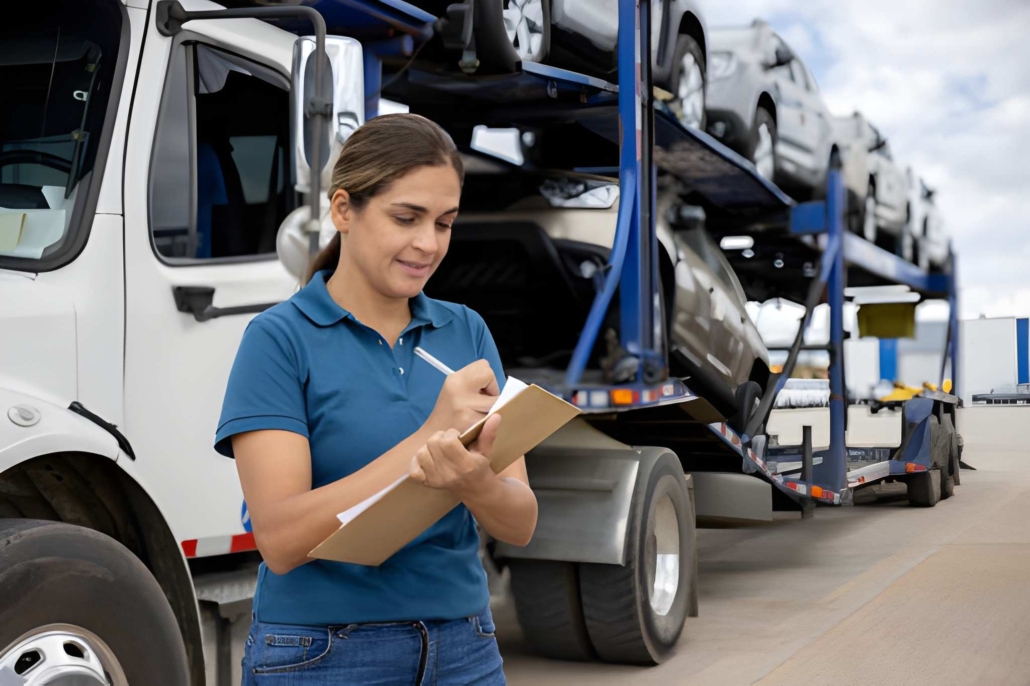
- Detailed, transparent, and open inspections: A full BOL inspection is what we base every shipment on. Apart from the professional carriers performing the inspection, an expert from our network will also be there to guide you along and explain every notation to you. We also advise you to question and engage.
- Transparency in documentation for all: Are you at both the pickup and delivery receiving a BOL copy? There is no need for us to explain the importance of each step because you understand it already. Neither are there any hidden clauses nor is there any confusing jargon.
- Fast and accountable claim handling: If damage is the cause of rare situations, we will not abandon you to take care of it on your own. Preowned Auto Logistics is on your side as the advocate. We communicate with the carrier on your behalf and walk you through the claims process while at the same time making sure your paperwork is in order and that your claim is handled quickly and fairly.
- Standardized measures for decreasing disputes: We only work with carriers who have been through our rigorous standards and thus comply with our shipping documentation and inspection requirements. Therefore, by everyone using the same professional method, we lessen the occurrence of the misunderstanding that leads to disputes.
Best Practices to Protect Yourself in Future Shipments
One of the significant sources of power is knowledge. In a bid to make every auto transport experience a delight, it is wise to put into practice these suggestions:
- Always be there: It is imperative that you personally witness the vehicle inspection for both the pickup and drop-off. Nobody else except your eyes can do such a marvelous job in protecting your automobile.
- Scrutinize the BOL before signing: Take your time always. Look at every condition report notation. In case you do not comprehend a marking, ask the driver to explain it to you. Signing should only be done when you are entirely sure that the document is a true reflection of the facts.
- Capture images of your own: Apart from the carrier’s file, take your own set of photos of your vehicle at the time of the pickup, showing its condition in every direction. This provides you with a personal backup copy.
- Save all your documents: Keep your copy of the Bill of Lading and any other shipping documents until you are sure of the service.
- Partner with a good company: It is advisable to do business with a company like Preowned Auto Logistics, which is built on the principles of openness and is characterized by excellent customer service and smooth handling of claims.
Conclusion
The Bill of Lading is the key support of accountability in the vehicle shipping industry and your most potent weapon to assure a fair and transparent process. If you comprehend its function, you are there at the inspection, and you cannot sign without looking at it carefully, then you keep your investment safe and have the power to handle any claim of damage during the vehicle shipping in a calm and composed manner.
An auto transport plan will work out well if a partnership is established between you and your shipping provider. Preowned Auto Logistics is the company you want to work with when you need a safe, transparent, and trustworthy shipping experience from the first step to the last one.
Frequently Asked Questions (FAQs)
What happens if I don’t note damage on the Bill of Lading at delivery?
If you sign the Bill of Lading without recording the new damage, you are in fact acknowledging that the vehicle was delivered to you in a proper condition. Thus, it is almost impossible to claim damages later on because the signed delivery document acts as the carrier’s evidence of a clean delivery.
Can I file a claim without a copy of the Bill of Lading?
You can try to make a claim, but the chances of it being successful are very low. The BOL is the location where everything is recorded. Without it, there is no contractual evidence of the vehicle’s condition from the very beginning, and the claim becomes your word against the carrier’s.
How soon should I report damages after receiving my vehicle?
It is necessary to inform you of the damage as soon as possible. Most carriers and brokers impose a time limit for filing claims, which is between 24 and 48 hours after delivery. First, it should be noted on the BOL, and then a formal claim should be submitted as soon as possible.
Are photos required when submitting a damage claim?
The BOL being the main document, photos are also essential and can’t be waived. They show unambiguous proof of the damage and its extent. Make sure you take as many photos as possible of every aspect of the newly found damage at the time of delivery.
How does the Bill of Lading prove a carrier’s liability?
The BOL establishes liability by linking the time and condition records. The vehicle’s condition during pickup is recorded in the inspection, before the carrier takes possession. If there’s damage on the delivery BOL, it means the car was damaged while the carrier had it, so it is responsible for it.
What if the carrier and I disagree about the vehicle’s condition?
You should settle your disagreement solely during the inspection. If you disagree with a pickup comment, talk it over with the driver. If you find newly damaged items but the driver denies it, then don’t hesitate to show it on the BOL and write “customer notes damage, driver disagrees”. Your remark and photos will help you to file a claim to be checked by the company.
Does Preowned Auto Logistics assist customers with damage claims?
Yes, of course. We are your advocate if you have a damage issue while shipping with us. We provide you with proper claim documentation, Edward’s communication with the carrier’s insurance, and work to ensure your claim is handled fairly and promptly. We are available to make the process less stressful for our customers.