

How to Ship a Classic Car Safely: A Complete Guide
You already did the most difficult part. Parts, paint, engine. Now the car has to get from one state to another, and one bad load or a stretch of bad weather can mark the finish and cut into the value you just built.
Shipping a classic is not the same job as moving a daily driver. Most owners figure that out pretty quickly once they start calling around. The worries are ordinary: highway chips, rain or dust on the paint, a scrape going up the ramp, and whether a low car will clear the equipment. Those worries are common because cars differ.
About two out of five classics travel in an enclosed trailer. Newer cars do that only about 1 in 10 times. Owners of older cars usually want the extra cover. Choosing the right carrier, the right method, careful prep, and solid records can reduce the risk of problems. This is the practical side of shipping a classic car: who to hire, which trailer to use, how to prep the car, and what to check when it arrives.
Why Classic Cars Require Specialized Shipping
A classic is not just an older daily driver. Many still have original paint or a restoration that shows every mark. Chrome, thin trim, older glass, and the interior—all of it takes damage more easily than a newer car’s parts. Some sit lower than stock. Some have suspension work that makes the ramps fit tightly. A small scratch or a water spot can change how the car looks and what it is worth. For many owners, the value is also personal.
Tell the company the car’s real condition and anything unusual about it before they quote you. The more they know, the better they can match the trailer and the gear. Mustangs, Corvettes, and Camaros are among the classics that people ship most often. More than half of those owners pick an enclosed trailer. They usually want to protect work already done on the car.
Common Risks When Shipping a Classic Car
On an open trailer, the car sits in the weather and in the path of whatever the highway throws up. Rocks and small stones chip paint and glass. Rain, snow, dust, and a long stretch of sun can spot the finish or dull it. Scratches and small dents often happen when you’re getting on or off the ramp, especially if the ramps are steep or the equipment doesn’t fit a low car. Over-tightened tie-downs, or those placed in the wrong place, leave marks of their own.
A car that doesn’t run, or one that’s been modified, needs different handling. Say so early. Thin photos and thin paperwork create a different problem later: an argument over which marks were already there.
Companies that move many vehicles put the damage rate on open trailers at roughly 2 to 3 percent. Most of those claims are small chips or weather marks. Enclosed trailers run closer to 0.5% than 1%. That gap is a big reason classic owners prefer enclosed trailers.
Choose the Right Transport Method for Your Classic Car
Open leaves the car out in the air. Enclosed keeps it inside a trailer the whole way. If the car is valuable, restored, or collectible, most people choose enclosed classic car transport because it blocks rain, snow, dust, and much of the debris that comes off the road.
The right call still depends on the car’s value, condition, the route, the expected weather, and what you want to spend. Open car transport can work for a project car or a lower-value classic when weather protection isn’t the priority. You are trading exposure for a lower price, and you should know that going in.
Why Enclosed Transport Is Recommended for Classic Cars
An enclosed trailer keeps rain, snow, dust, and most highway debris off the car. It also keeps the car out of direct sun and gives you a bit more privacy. Soft tie-downs and a lift gate, when the company has them, make it easier to load a low car without scraping the bottom.
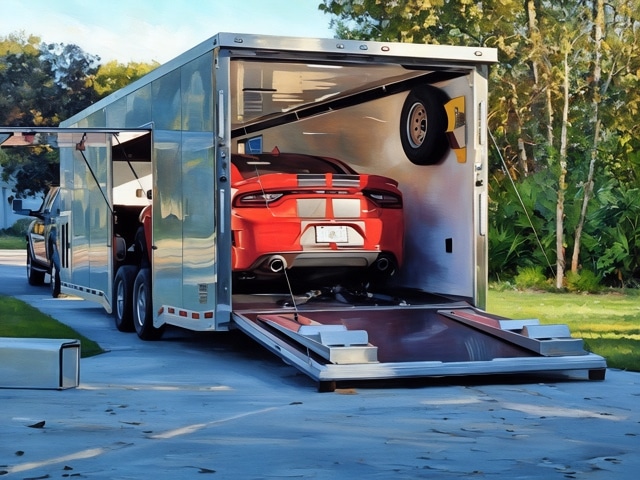
Enclosed typically costs 30 to 60 percent more than open for the same trip. Most collectors treat that extra as part of protecting the car, not as an add-on. Preowned Auto Logistics treats enclosed transport as the usual choice for classic and high-value cars for the same reasons.
When Open Transport May Be Considered
Open transport makes sense for some project cars and classics where you don’t need maximum weather protection. Compare the lower price against the extra exposure. It is not automatically unsafe if the company uses decent equipment and you understand the trade-off. For a finished or high-value classic, though, most owners decide the enclosed option is worth the difference.
How to Choose a Classic Car Shipping Company
Experience with classic and specialty cars matters more than a shop that mostly moves ordinary vehicles. Look for classic car shipping services that regularly use enclosed trailers and know how to load a low or modified car. Confirm they are licensed and that their insurance is current. Ask which trailer and loading gear they plan to use, not what they have somewhere in the fleet. Confirm they can handle low ground clearance, modifications, oversized loads, or a car that does not run.
Pay attention to how they talk about the pickup window, updates while the car is moving, and delivery. When you compare quotes, compare protection and service, not just the number at the bottom.
Questions to Ask Before Booking
- Do you offer enclosed transport for this shipment?
- What type of trailer will actually carry the car?
- How will you load it and tie it down?
- What does the cargo insurance cover, and what are the limits?
- What happens if the car won’t start?
- Can you handle low ground clearance?
- How do you record the car’s condition at pickup?
- How will I get updates?
Prepare Your Classic Car for Shipping
Follow the prep steps the company gives you. Pull out personal belongings and anything loose that could shift or disappear. If detachable parts could break or scratch the paint, remove them or secure them. Check for leaks and any mechanical problems. Tell the driver anything that affects whether the car starts, rolls, steers, or stops. If the car is modified or delicate, say so early so the team shows up with the right gear instead of figuring it out in your driveway.
Document the Vehicle’s Condition
Take clear photos of the exterior from several angles before the driver arrives. Get the wheels, bumpers, trim, glass, lights, and the interior. Capture existing scratches, dents, chips, rust, and anything else you can already see. Write down the mileage. Keep the photos and every shipping paper.
Those records make both inspections more accurate. They also reduce later arguments about what damage was already there. Collector-car claims often settle based on what the owner can show with photos and paperwork.
Understand Insurance and Protection Before Shipping
Ask about cargo insurance before you book, not after something happens. Find out what it covers in transit and whether the limits are high enough for your car’s value. Open trailers commonly carry coverage of $100,000 to $250,000 per load. Enclosed trailers often have higher limits.

Ask about exclusions and how a claim actually works. Insurance isn’t the same as having enough coverage for a high-value classic. Get the important details in writing. No policy covers every type of damage, so read the terms instead of assuming.
Understand How Classic Car Shipping Works
The steps are straightforward once you know what to expect.
Step 1 – Request a Classic Car Shipping Quote
Give the year, make, model, condition, and whether the car runs. Give the pickup and delivery locations. Mention low ground clearance or any modifications. Ask for an enclosed option if that is what you want. Note any special handling so the quote matches this car, not a generic sedan.
Step 2 – Review the Transport Plan
Confirm the transport type and equipment. Check the estimated pickup and delivery windows. Verify the insurance details and the actual carrier. Walk through any special instructions before load day, while there is still time to change the plan.
Step 3 – Pickup and Vehicle Inspection
Do the condition inspection with the driver when they arrive. Compare the car against your photos and the inspection form. Watch the loading. Make sure they use the equipment you were told about and secure the car before the truck leaves.
Step 4 – Transit and Shipment Updates
A reliable company sends a pickup confirmation, a few updates during the trip, and an estimated delivery window. Exact arrival times move around because of weather, traffic, and the carrier’s schedule. A window is usually more honest than a fixed day.
Step 5 – Delivery and Final Inspection
Inspect the car before you accept it. Compare it with the original condition report and your photos. Check the paint, wheels, trim, glass, bumpers, and other visible areas. Note any differences right away, on the paperwork, before the driver leaves. Once you sign off clean, it’s much harder to file a complaint later.
How Much Does It Cost to Ship a Classic Car?
Price moves with every shipment. Distance and route set most of the base rate. Size and weight, open versus enclosed, whether the car runs, and extra equipment all change the number. Location, season, and carrier availability also affect the rate.
Recent bookings show that a classic from 1985 or earlier often runs $800 to $1,350 for a 500- to 1,500-mile trip on an open trailer and $1,050 to $1,500 enclosed. Cross-country enclosed shipments typically run $1,500 to $2,500, with higher-value or low-clearance cars toward the top of that range.
Enclosed costs more because of the protection and the equipment. The cheapest quote is not automatically the right one when the paint is fresh.
Common Mistakes to Avoid When Shipping a Classic Car
Most problems start at booking. Taking the cheapest quote without asking how they handle classics, or skipping enclosed transport when the car needs it, is how many damage stories begin. Forgetting to mention that the car doesn’t run, has modifications, or sits low creates loading problems that could have been planned for.
Other common misses: too few photos, skipping the inspection, not checking insurance limits, leaving personal items in the car, booking at the last minute, and signing the delivery paperwork without actually looking the car over.
Classic Car Shipping Checklist
- Choose a company that regularly handles classics, and select a trailer that fits the car.
- Confirm the insurance limits.
- Tell them whether it runs, and mention mechanical problems or low clearance.
- Before pickup, clear out personal belongings and secure loose parts.
- Photograph the car from several angles, including existing marks.
- Walk the inspection with the driver and confirm how you will get updates.
- At delivery, look the car over before you sign, and keep the paperwork.
How Preowned Auto Logistics Helps Protect Classic Cars
Preowned Auto Logistics ships classic and specialty vehicles regularly and offers enclosed transport for higher-value cars. When a car needs it, they use equipment such as hydraulic lift gates and soft tie-downs. They cover most routes nationwide and offer door-to-door service. You hear from them from pickup to delivery, so you know where the car is and when to expect it.
That lines up with what matters most on a classic move: weather and debris protection, careful loading for a low car, and a clear record of condition at both ends.
Frequently Asked Questions About Shipping a Classic Car
Is enclosed transport better for classic cars?
It protects against weather, road debris, and sun, and it offers more security and privacy. It is a better fit for cars with delicate finishes or a restoration you do not want to gamble. About two out of five classics already travel this way.
Can I ship a classic car that does not run?
Yes, if the company has the equipment to load it. Tell them before you book so they can send a trailer with a winch or the right gear. Non-running cars usually cost a bit more because of the extra handling.
Should I remove personal belongings before shipping a classic car?
Yes. Pull out anything loose or personal before the truck arrives. Most companies do not want items left in the car. Anything that stays can slide around, go missing, or get in the way during loading.
How should I prepare a classic car for transport?
Inspect it, photograph it as it sits now, and remove loose items. Tell the company about mechanical problems or low clearance. Then follow the prep steps they give you.
How long does classic car shipping take?
A shorter trip might only take a few days. A cross-country move can take a week or longer once you factor in the route, weather, and carrier availability. Most companies give you an estimated window instead of a firm arrival day.
How can I protect my classic car from damage during shipping?
Choose the right trailer and a company that ships classics often. Make sure they have the equipment to load this car safely. Photograph it before it leaves, and confirm the insurance limit is high enough to cover its value.
Is classic car shipping more expensive than regular car shipping?
Often, yes, mostly because of enclosed transport and any special handling. A classic usually costs a little more per mile than a modern car even on an open trailer. The exact difference depends on the car, the route, and the equipment.