
How to Get Your Vehicle Ready for a Smooth Shipping Experience
Shipping a car can be daunting, whether you’re moving across the country, buying a classic car, or heading somewhere for the season. But the key to a smooth shipping experience doesn’t lie in the transport itself – it lies in the prep work you do before your car even leaves the driveway.
Proper vehicle preparation isn’t just doing the carrier a favor; it’s safeguarding your investment. Skipping steps in preparation is the quickest way to find yourself dealing with transit delays, additional surcharges, and stressful damage claims. A vehicle ready to ship, however, means a quick pickup, open lines of communication with your carrier, and all the peace of mind you need.
Here at PAL, we’re all about making the shipping process clear and efficient. When our customers are properly educated and guided, the entire automotive shipping process is smooth and efficient. This guide contains everything you need to know to safely get your car from your current address to its new home.
Complete Vehicle Shipping Preparation Checklist
Use this list to make sure you qualify for the perfect shipment badge. Performing these steps about 1 week before your carrier pickup will give you plenty of time for their arrival.
Clean your vehicle inside and out.
Although it may appear paradoxical to clean your car before it gets loaded onto an open trailer, there are practical reasons why you should do it.
- Exterior wash: The only effective way to document pre-existing damage is by thoroughly cleaning the vehicle. Dirt and road salt will easily obscure small chips, scratches, or dents in the paintwork.
- Interior cleaning: Clear out loose change, chargers, and other odds and ends to enable a quick check for interior damage. Clutter will fly around, making it difficult to conduct a thorough interior check.
Remove personal belongings
A common misinterpretation of auto transport is treating the car as a moving van.
- Regulatory compliance: According to the Department of Transportation (DOT), car carriers are prohibited from transporting personal household goods within the car.
- Safety concerns: Articles left inside the car are unsecured, and in the event of sudden braking or acceleration, an uncovered box of books could shatter a window or damage upholstery.
- Carrier’s insurance limitation: Carriers provide insurance coverage only for your vehicle and are not responsible for the personal contents in your trunk or vehicle, such as laptops, golf clubs, or designer clothing.
- The underweight allowance: Some auto transport companies allow as much as 100 lbs of soft goods in the trunk, but you will need to receive pre-approval from the carrier. In this case, it’s always safest to remove them.
Document existing damage
This will be your first line of defense against claims. Complete a pre-inspection before the driver arrives:
• Good photos: Have high-quality photographs of the vehicle on all four sides, on the roof, and on the wheels.
• Detailed shots: Take close-up photos of any dents, dings, and scratches.
• BOL match: Have the driver compare their pre-trip findings to your bill of lading.
Inspect for leaks and mechanical issues.
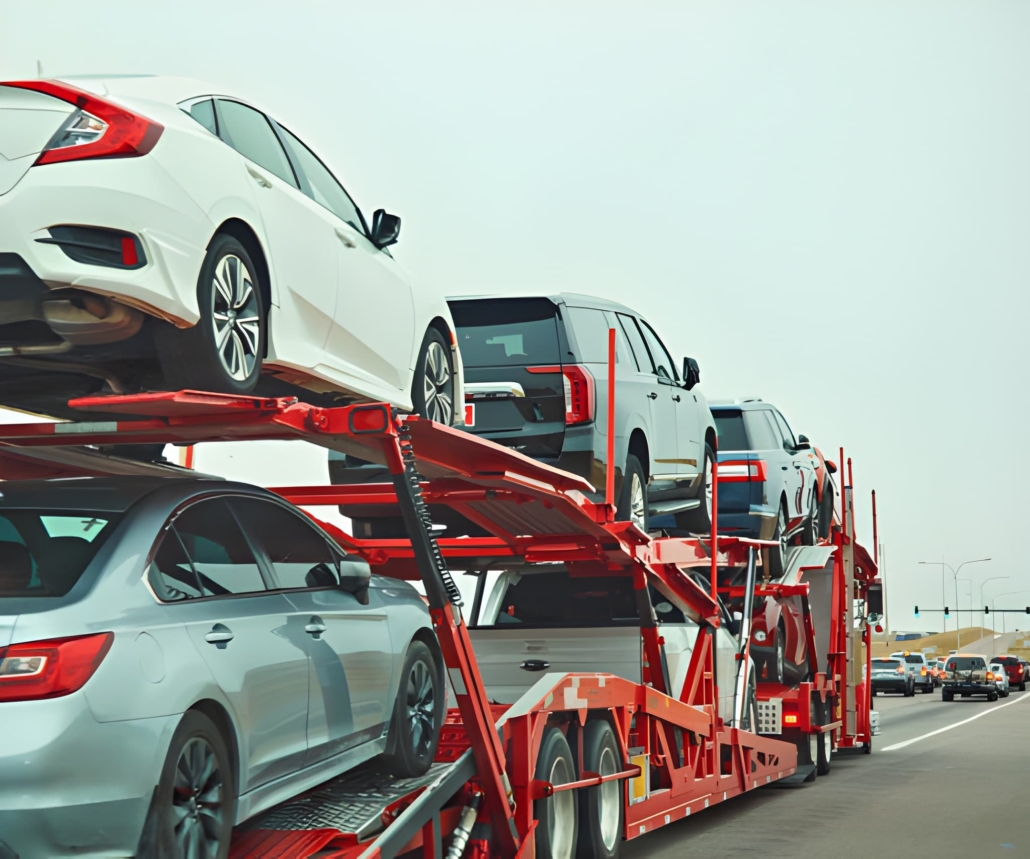
When carriers transport vehicles, they stack them on top of one another. If your car is on the top rack and has an oil leak, it will damage the car on the bottom rack.
• Inspection: Inspect cars for oil, brake fluid, and coolant leaks.
• Disclosure: Tell your PAL representative immediately if there’s something peculiar about your vehicle (e.g., the engine sputters upon ignition or if you are experiencing mushy brakes) because your vehicle may be rejected at pickup if the mechanical quirk isn’t revealed.
Maintain proper fluid levels.
The car must be operational for it to be driven onto the trailer, even if you don’t want any leaks.
• Top-offs: ensure that your oil and coolant are at the appropriate levels.
• Avoid overfilling: Do not top off to the fullest extent before shipping; temperature fluctuations and the movement of the car can cause fluids to overflow.
Keep fuel level low
Unlike a road trip, you don’t want a full tank of fuel here.
• 1/4 tank rule: Aim for about one quarter of a tank of gas.
• Reduce weight: Fuel is heavy; about 6 pounds per gallon. If 10 vehicles are being hauled and each is full, that’s a lot of weight to worry about, both for the carrier’s fuel mileage and its weight limit.
Check battery and tire condition.
Shipping a dead car costs considerably more because you’ll need to use a winch or special equipment.
• Battery: Make sure the battery is fully charged, and terminals are tightly attached.
• Tires: Tires must be fully inflated; you won’t be able to safely and easily load it if there is a flat tire.
Disable alarms and toll tags
• Alarms: Your trailer may shake, setting off a car alarm. This wastes your battery and annoys the driver. Please turn it off, or kindly provide instructions on how to disable the alarm.
• Toll tags: Leaving an active EZPass or SunPass in your windshield could lead to paying for every toll a truck goes through from New York to Florida. Unplug the tag or wrap it in a signal-blocking bag.
Secure or remove loose parts.
Anything attached to the outside of the car could easily break due to wind resistance when on the road.
• Movables: Remove bike racks, roof racks, and aftermarket spoilers, unless secured by the factory.
• Antennas: Screw them down or retract them.
• Mirrors: Fold them inward towards the car.

Important Documents and Keys to Prepare
You would rather not be looking around in a kitchen drawer when your driver arrives! Please have these items ready for the handover:
• Your keys: You will be required to hand over one full set of your keys (including the fob, along with the trunk key).
• A spare set of keys: Do not hand over the only set of your keys to anyone. Always have a spare set with you.
• Booking confirmation and photo identification.
• Provide a mobile number for the recipient of the car to reach them at their destination.
At PAL, uninterrupted communication is our top priority. Having these ready makes the transfer take minutes rather than hours.
Understanding Insurance and Inspection Reports
The Bill of Lading (BOL) is a critical document in the shipping process. This is both your receipt and condition report.
- Pickup inspection: The driver will walk around the car and note any pre-existing damage on the BOL. Make sure you scrutinize the report! If the driver misses an already existing dent and you know it’s there, point it out. If the driver identifies a dent that doesn’t exist, please make a note to remove it.
- Cargo insurance is standard for most professional carriers. This policy covers damage incurred by the carrier due to their negligence or equipment malfunction. It generally will NOT cover Act of God scenarios (such as hail) or road hazards (such as flying rocks), which is why some people opt for enclosed transport.
- The signature: Signing this document is an acknowledgment of the recorded vehicle condition.
What to Expect During Vehicle Pickup
Pickup is an ongoing process. As the carriers work around traffic, weather conditions, and other clients, they can rarely provide a precise minute-by-minute appointment. Instead, you get a time window for the planned pickup.
1. The arrival: the vehicle may be a multi-car trailer hauler. Should your street be too narrow or have branches that could potentially harm the vehicle, the driver may request that you meet at a nearby safe parking area, such as a grocery store.
2. The loading: You will observe the drivers maneuvering the automobile onto the trailer using ramps. You may choose an open carrier, the most affordable way to transport your automobile, or an enclosed carrier, which protects your automobile from the weather.
3. The handoff: At the point when your BOL has been signed over, and keys are surrendered to the transporter, then your automobile has officially started on its adventure.

What Happens During Transit
The dispatcher and driver continue to monitor and manage your vehicle en route.
• Updates: We will notify you with new ETAs as needed.
• Times: Time of delivery can range from two days for a 500-mile drive to seven to ten days for a 3,000-mile cross-country shipment.
• Security checks: Your driver will make stops to examine the straps and chains holding your vehicle.
Preparing for Vehicle Delivery
Delivery is the opposite of pickup.
• Inspect at drop-off: Perform another thorough inspection of the vehicle before the driver departs. Reference your photos from pickup.
• Look for new damage: Scan for scratches, chips, mechanical issues, or any other new damage not present at pickup.
• Document any damage on the Bill of Lading before you sign it; this is critical to any claim you may need to make.
• Photos: If new damage is present, document it with photographs while the driver is present.
Common Mistakes to Avoid
Keep your shipment easy by steering clear of these common mistakes:
• The mobile closet: Don’t leave the car bulging with clothes. More weight and more danger!
• Fuel fever: Delivering the vehicle to the carrier with a full tank of gas.
• Radio silence: Don’t ignore your phone when the driver calls for pickup/drop-off.
• Last-minute madness: Don’t try to book and pack the car on the same day. Book at least 24 hours ahead.
Pro Tips for a Hassle-Free Experience
• Book early: You’ll get the best rates and the most dependable schedules 2-3 weeks before booking.
• Be flexible: A 2-day pickup window will greatly help with logistics.
• Pick the right service: Sports cars with a low ground clearance and high-value antiques should always use enclosed transport.
• Use a specialist: PAL is licensed and experienced with specialized logistics.
Frequently Asked Questions (FAQs)
How far in advance should I prepare my car?
Start the cleaning and documentation process 3 to 7 days before pickup. This gives you time to fix any minor leaks or find those spare keys.
Can I leave personal items in my car?
Generally, no. It is against DOT regulations and is not covered by insurance. Most carriers will ask you to remove them.
Do I need to be present at pickup and delivery?
It is highly recommended. If you can not be there, you must designate a representative (18 or older) to sign the inspection reports on your behalf.
What happens if my car is not running?
We can ship non-running vehicles, but we need to know in advance so we can send a truck equipped with a winch. There is typically an additional fee for this service.
Is my vehicle insured during transport?
Yes, all licensed carriers must carry insurance. We can provide specific coverage details based on the carrier assigned to your route.
Conclusion: Set Yourself Up for Success
Vehicle shipping does not have to be a gamble. By following this preparation guide, you eliminate the variables that cause 90 percent of transport headaches. When your car is clean, empty, documented, and mechanically sound, you set the stage for a professional, efficient experience.
PAL is dedicated to maintaining transparency and reliability. Our goal is to move your vehicle as safely and quickly as if it were our own.
Ready to get started?
Get a quote today or speak with one of our transport experts to plan your shipment with complete confidence.