
Steps to Ensure Your Vehicle Shipping Bill of Lading Is Filled Out Correctly
Dealing with the maze of vehicle transport can be intimidating, but knowing the right documents really helps. Every car shipping success is built around the Bill of Lading (BOL). Knowing how to fill out a vehicle shipping Bill of Lading in the right way is the crucial step that ensures your car transport will be smooth, transparent, and secure. Inaccurately or incompletely filling the form might cause delays, disputes, and even the rejection of insurance claims.
This detailed manual, along with the industry knowledge from Preowned Auto Logistics, will escort you through every indispensable point. We will break down the BOL, pinpoint the risks of mistakes, and instruct you on how an accurately performed document is your vehicle’s safety from loading to unloading.
Why the Bill of Lading is Your Shipping Superpower
Before we get down to the details, it is essential to know why the Bill of Lading (BOL) is the most necessary instrument in the auto transport industry. You can think of it as the official agreement that confirms your dealings with the carrier.
- Legal contract: The BOL is the document that legally connects you and the carrier with specific terms and conditions. It specifies the obligations, the services to be provided, and the liabilities.
- It records the condition of your vehicle. Here is where you carefully detail your vehicle visually before it is loaded. Every scratch, dent, or existing imperfection is referenced.
- It works as a receipt: When signed, it indicates that the carrier is responsible for the vehicle to be transported. Upon delivery, the second signature confirms that the car has been received.
- It’s your proof: If there were any such issues like damage during the shipment, then the BOL would be the unequivocal proof of the car’s condition at the time of both pickup and delivery. This is very important for facilitating insurance claims and dispute resolutions.

Preowned Auto Logistics recognizes that accurate record-keeping is the foundation of the reliable transportation of preowned automobiles. They go on to say that a properly completed BOL is not only a good practice but also an indispensable tool for ensuring accountability and customer satisfaction throughout the entire process of car shipping.
Gathering the right information before filling it out
It is impossible to correctly fill out a form without having all the necessary information at hand. A hurried search for a document while the carrier is waiting can cause you to make mistakes. Take a few minutes before the arrival of the truck to collect everything you need. This preparation not only facilitates the whole process but also makes it more accurate.
Your vehicle’s vital statistics: VIN, make, model, and year
This information is basically the fingerprint of your car. Incorrect or mismatched details may lead to confusion and even cause your workflow to be delayed.
- Vehicle Identification Number (VIN): This is a 17-character unique identifier of your vehicle. No one else has the same VIN as your car. It is located on the driver’s side of the dashboard (can be seen through the windshield), the driver’s side doorjamb sticker, as well as on your vehicle registration and insurance papers.
- Make, model, and year: It looks like a simple thing, but make sure that you are exact (e.g., Honda Accord EX-L instead of just Honda Accord).
Have the information handy, either written down or saved on your phone, so you will be able to give it out promptly and check whether it is put correctly on the BOL.
Verify pickup and delivery addresses and contact details
An error as minor as a single letter in the address can be the reason that your car will be sent to another city or that the carrier won’t be able to find the location, and thus, there will be delays and annoyance caused.
- Double-check the details of the address, such as street names, city names, and ZIP codes.
- Also, make sure that the names and phone numbers of the contacts at the pickup and delivery locations are correct. The driver will need a contact number where he can inform them of the arrival time.
- If the pickup location is a gated community with a code or a busy downtown street with limited parking, let the carrier know ahead of time.
Have the carrier’s name, MC number, and transport date ready
The BOL works in both ways. The airline also gives its information just like you do.
- Carrier’s name: It has to be the name of the company that is handling the physical transportation of your car.
- MC number: This is the motor carrier number, which is given to the carrier by the Federal Motor Carrier Safety Administration (FMCSA). It is evidence that the government authorizes the carrier to transport goods across state lines. In case you are not sure about this number, you can always check it on the FMCSA website.
Make sure the date of the pickup is accurate.
The moment you booked a shipment through a company like Preowned Auto Logistics, you were given an order or a reference number. This number is a link between your transport job and all the details available in the system. So, having it handy makes the driver able to locate your information fast, and it is a way of confirming that the BOL goes with the correct order.
Reviewing Vehicle Condition Thoroughly
This is the part of the process where you are the most physically involved, and it is also the part where your detail orientation skills are of utmost importance. The condition of your vehicle as documented during the inspection at the time of the driver’s arrival is the official record. You shouldn’t rush this step.
Conduct a full inspection before the carrier loads your car
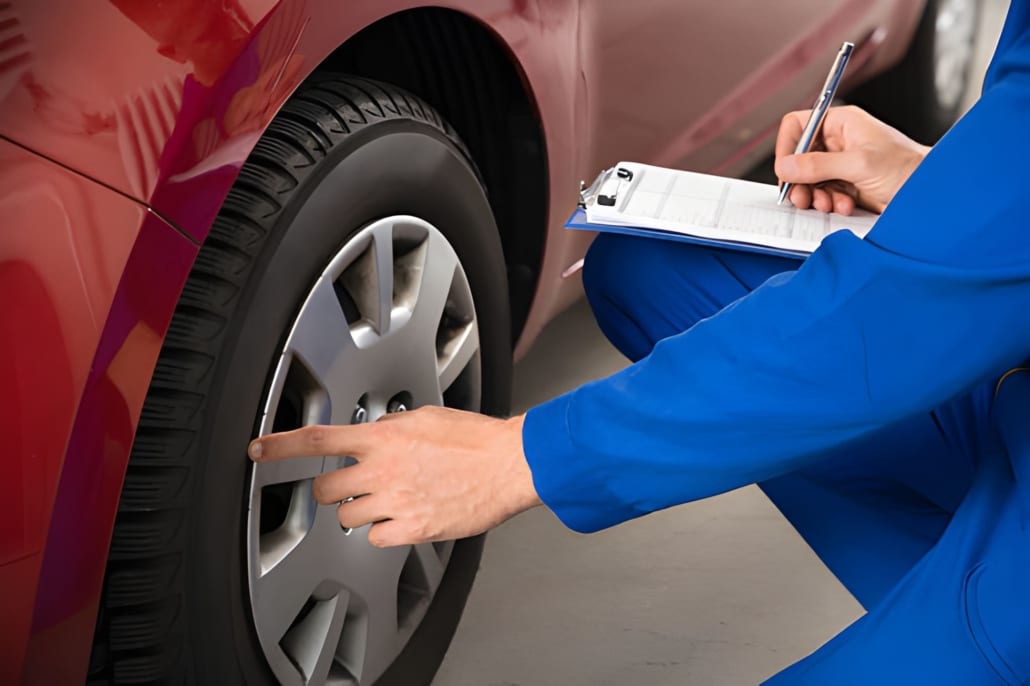
The driver will initiate the visual check of the vehicle, and you must be right there with him. Inspecting as if it were your first time buying the car, you have to go through it.
- Start with a clean car. Dirt on the vehicle can be a barrier to the detection of scratches, dings, and scuffs. If it is in your power, then treat your car to a wash one or two days before the pickup.
- Check under good light. Should the pickup be planned for the night, or if it is a dimly lit garage, get a strong flashlight (preferably on a mobile phone) and use it to light up every panel.
- Be systematic. Inspecting the car should be done in an orderly manner. Begin with the driver’s door and continue in a clockwise manner. Check out each body panel first, then the bumpers, hood, roof, and trunk. Get down close and have a look at the lower body panels and the wheels.
- Don’t forget the small items. Search for chips in the paint, minor scuffs on the wheels, and very small dings. Any of these that you don’t record now can be questioned later.
Note every dent, scratch, or imperfection—no matter how minor.
It is certainly not the time for you to be overly kind and to overlook small weaknesses of the product. The main idea of the inspection is to generate a truthful and complete report. In case there is a small dent on the door that you haven’t noticed, point it out. If there is a faint scratch on the bumper, make sure it is getting written down.
Take time-stamped photos or videos for extra proof
Although the written BOL is the main legal document, visual evidence is a strong support. Your smartphone is the best tool for you here.
- Put time stamps on your camera app. This indicates the exact date and time when the photo or video was taken.
- Record a detailed video. First, show the driver and the truck in your video. Next, slowly walk around your car, describing what you see. If there is any damage, zoom in on it. Also, make sure you film the odometer reading and the VIN plate.
- Take detailed photos. Besides the video, take clear and bright photos of each side of the car. Take close-up photos of any existing damage that you have identified.
- Do this whole process again at delivery. A second set of photos and a delivery video will help you to make a direct before-and-after comparison.
Confirm that all observations are recorded in the BOL before signing.
The photos and notes you make in your mind are for your personal use. The BOL is for the official record. After the walk-around, check the condition report section of the BOL with the driver. Make sure every single flaw that you and the driver found is not only pointed out on the vehicle diagram but also mentioned in the notes. If something is missing, kindly ask the driver to add it before signing the paper.
Accurately Filling Out Vehicle and Shipment Details
After the inspection, you should make sure that the rest of the BOL is equally accurate. This part of the document identifies the vehicle and describes its transport needs.
Confirm the identifying information of your vehicle.
The information for the VIN, make, model, and year should be in the same place. Directly compare these with details on your registration or VIN plate on your vehicle. One single incorrect digit in a VIN can cause you a big problem. Also, make sure the license plate number and state are correct.
Make sure that the mileage and VIN are accurate.
The driver will get the mileage by looking at the car’s odometer. Check if the mileage shown on the BOL is the same as what is on the dashboard. This is very important as it will help confirm that the vehicle wasn’t driven too much during the loading and unloading process (most carriers allow for a few miles for this).
Identify the type of vehicle (operable or inoperable)
This is a very important piece of information that decides the manner of the vehicle’s handling as well as the amount of the transport cost.
- Operable: The car is in working condition, runs smoothly, and hence can be driven on and off the transport truck.
- Inoperable: The car is not functional, does not start, steer, or brake properly. Therefore, it will need a special apparatus, such as a winch, to be loaded.
Incorrectly labeling an inoperable vehicle as operable may lead to significant delays, as the driver might not have the equipment needed for the loading. Make sure that this step is done accurately.
Mention any accessories or modifications.
A typical vehicle doesn’t have issues when it comes to loading. A modified one could necessitate the provision of protective measures. Make sure you have mentioned everything that alters your car’s external size or has to be specially treated.
Some examples are:
- Racks or cargo boxes on the roof
- Over-sized spoilers or wings
- Custom ground effects or lowered suspension
- Over-sized or fragile custom wheels
- Covers or toolboxes for truck beds
Recording Preexisting Damages Clearly
This part of the BOL is the formal documentation of the results from the joint inspection. Clarity works here like a charm. Different interpretations of ambiguous notes can weaken your position in a potential claim because they can be understood in different ways.
If there are any damages, point them out on the BOL with the help of diagrams.
Usually, BOLs have a basic wireframe model of a car (top-down and side views). A driver will indicate the place of any damage by using a set of codes (e.g., S for scratch, D for dent, C for chip). Be sure that every mark corresponds to the actual damage of your car while watching them do this.
Do not allow writing such as “minor scratch”; be focused on the facts
If there are notes accompanying the diagram, you should demand that the writers be very specific. A vague description is completely useless.
Instead of: “Scratch on door,”
- Specify: “3-inch vertical scratch on rear driver-side door.”
Instead of: “Bumper scuff,”
- Explain: “Light scuff marks on the front passenger-side bumper corner.”
This level of detail eliminates any doubt about the size and place of the preexisting damage.
Make sure that all remarks can be read and are clearly written
If the driver’s handwriting is not clear to you, it would be better if they clarified or rewrote it. Illegible notes are almost the same as no notes at all. The document has to be understandable by anyone who may need to look through it later, for example, an insurance agent.
Confirming signatures and dates
A signature on a contract is a sign of agreement. BOL is an exception. You and the driver formally sign the deal, thus your signatures on the document put it into effect. Proper signing procedures cannot be compromised if the document is to remain valid.
The shipper and driver are both required to sign and date the BOL before transport commences.
Upon completion of the vehicle inspection and filling in the details, you and the driver are to both sign and date the pickup section of the BOL. Your signature is the confirmation of the vehicle’s condition as stated by you. The driver’s signature is the confirmation that they have taken the car in the condition described by you.
- Compare the car to the pickup report. Walk the car with your copy of the BOL(also the driver’s copy) and scrutinize every centimeter of the vehicle.
- Check for new damage. In case you spot a new scratch or dent that was not there on the original report, make sure you point it out right on the delivery section of the BOL before signing it.
- Sign only when satisfied. Your signature on the delivery portion of the BOL is the confirmation that the car has been received by you in the described condition. By not indicating the new damage and still signing, you are thus releasing the carrier from any liability.
Common Mistakes to Avoid When Completing the BOL
Even with the best of intentions, it is quite easy to make a small mistake that has a big impact. Here are some of the most common errors from which you should protect yourself:
- Not filling out or completing the BOL sections. Every line on the BOL has a reason. Blank spaces can cause vagueness. Make sure that everything from contact information to the vehicle details is not only filled in but filled out completely.
- Not checking the BOLs of the pickup and delivery. Do not trust memory alone. At the time of delivery, take a copy of the BOL of the pickup in your hand and compare the condition reports together. This is the only way to be sure if there were any new damages.
- Not checking hard VIN or odometer readings. Quite often, people just skim through the long string of numbers and take it for granted that it is correct. Spend that extra 30 seconds to write down the VIN from the BOL and then compare it, character by character, with the VIN on your car. Also, do the odometer reading comparison.
- Signing a contract without inspecting or reading the terms. Never sign a blank or partial BOL. A driver who is in a hurry and is trying to rush you through the inspection should not be allowed to do so. Your signature is your last word. If at the time of delivery you sign without noting any issues, you are taking the vehicle as it is.
How Preowned Auto Logistics Keeps Documentation Accurate and Transparent
Reading through a Bill of Lading can be very confusing, but it is also a very easy and secure process when you have the right partner in logistics. At Preowned Auto Logistics (PAL), we don’t just talk about it; we actually implement customer protection and transparency in the whole process.
Well-equipped and knowledgeable carriers
About one another, we only engage the professional and well-known carriers who are aware of the significance of a well-done BOL. They won’t just throw you a clipboard and leave. The transport partners we work with are trained to take you through the inspection, tell you what each section of the form means, and make sure you are confident before signing.
We make sure that the person is present for the inspection
One thorough inspection with you or your designated agent at both the place of pickup and the place of delivery is what we insist on. This joint method makes sure that both sides agree on the condition of the vehicle from the very beginning; thus, there is no room for guessing, and the chances of conflicts are eliminated.
You can sign the BOL on paper or on your device.
Everyone has different likes, and that’s why we have a group of other carriers who can use a common paper BOL or can even use an electronic BOL. After reading your copy, you will be able to save your BOL in your email, together with the photos, and the signatures will all be done digitally.
Conclusion
The proper Bill of Lading is a prerequisite for a smooth, easy-to-follow, and safe shipping process. It is your chief guard; it changes the situation from one of unpredictability into an orderly, accountable transaction. You freely allow your investment to be guarded and conflicts avoided by thoroughly checking through every section of the documents, personally taking part in vehicle inspections, and ensuring that every signature has been obtained. Thus, customers are able to rely on Preowned Auto Logistics to carry out every document handling professionally and respectfully to the very end.
Frequently Asked Questions
What information is required to complete a vehicle shipping Bill of Lading?
The first things should be full pickup and delivery addresses and contact information for the person to contact; vehicle year, make, and model; VIN; current odometer reading; Carrier name and MC number; and shipment order or reference number.
Can I fill out the Bill of Lading online or digitally?
Many modern carriers, such as Preowned Auto Logistics, accept electronic Bills of Lading. These are usually signed digitally on a tablet or smartphone. Emails with copies are sent right away. However, some carriers still provide traditional paper carbon-copy forms that are also legally binding.
What happens if I sign an incomplete Bill of Lading?
Ill-fated! It is risky to do this. At pickup, it indicates that you have not agreed upon a full and precise condition report and, thus, are susceptible to damage without proof. Upon delivery, signing an incomplete BOL (or signing a complete one but not noting new damage) legally indicates the acceptance of the vehicle in its current state, and therefore, the ability to claim damage becomes void.
Do I need to be present when the Bill of Lading is completed?
The best practice is for you to be there. However, you are allowed to choose someone to be your representative (a friend, relative, or colleague). It has to be a person who accompanies the driver for the inspection and signs the BOL. That person must be willing to inspect with the detail level that you would.
How do I verify that my Bill of Lading was filled out correctly?
Make sure you go through all the parts before putting your signature down. Check if the VIN on the form corresponds with the VIN of your car. See if the addresses and contact details are authentic. The vehicle condition report diagram and remarks should describe the car’s condition. Only after you have verified the correctness and completion of every piece of information should you sign the document.
Who keeps the Bill of Lading after the shipment?
The signed Bill of Lading will be with three people: you, the carrier, and, if appointed, the broker. A copy will be given to you at pickup, and another updated one at delivery. Therefore, these documents serve as your official shipment records and should be stored properly.
How does Preowned Auto Logistics help customers review their BOL?
Preowned Auto Logistics connects you with carriers who have undergone training and are skilled at guiding you through the BOL process. They will accompany you during the inspection, explain how the recording of damages is done, and check the completion of the sections before seeking your signature. Moreover, our customer service team is always ready to respond to any queries you may have regarding the documentation process, thereby ensuring that you experience support from the beginning to the end.