

Why Preparing for Pickup is the Make-or-Break Moment
You wouldn’t hand over your house keys to a stranger without locking up your valuables, yet thousands of people hand over their car keys every year without doing a basic walkthrough. If you’re nervous about shipping your car across the country, you should be, at least enough to prepare properly.
Nearly 40% of transport delays happen because a car wasn’t ready when the truck arrived. Whether it’s a dead battery or a trunk full of golf clubs that the driver refuses to haul, these minor oversights lead to “dry run” fees and massive headaches. We’ve seen countless owners lose out on insurance claims simply because they didn’t wash their car before the driver arrived. If the vehicle is dirty, the driver marks it as such, and you lose your ability to prove a new scratch happened on their watch.
Understand Your Cross-Country Car Shipping Options First
Moving a vehicle across the country is a massive logistical puzzle. Your choice of service doesn’t just change the price; it completely alters your preparation strategy and risk level.
Open vs. Enclosed: Weather vs. Walls
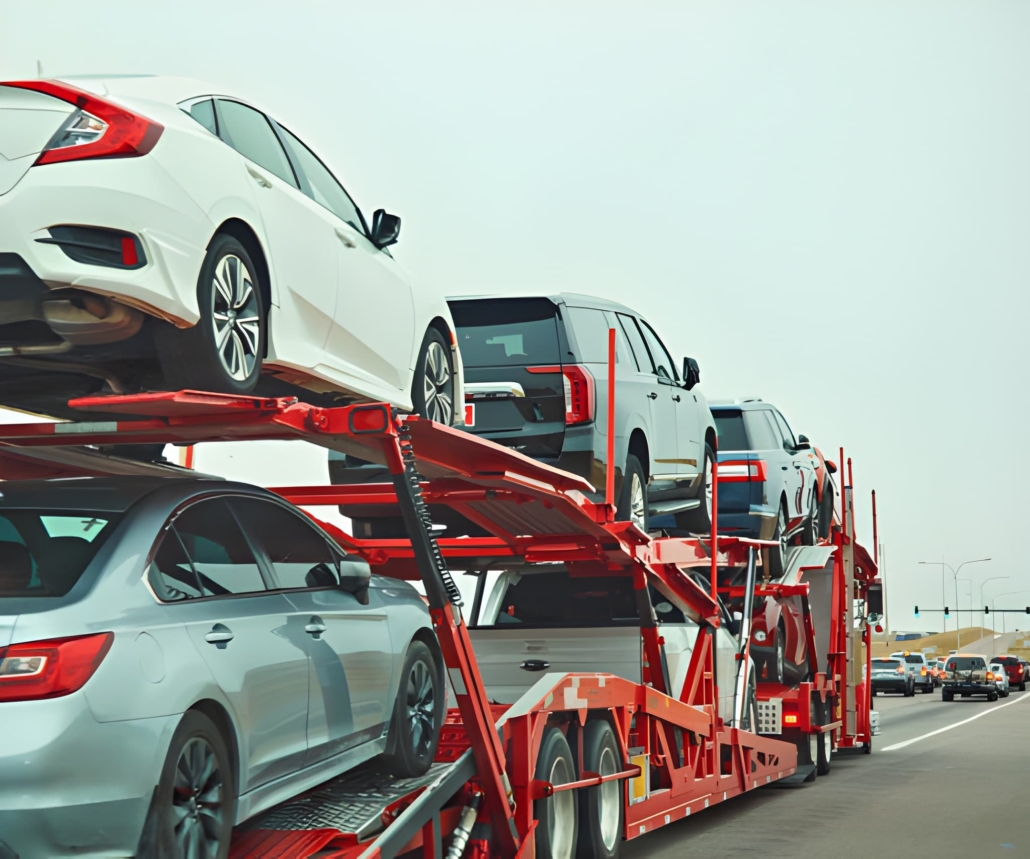
Open transport is the industry standard—reliable but exposed to 2,000 miles of road grime and rain. For high-end or low-clearance cars, enclosed transport is mandatory. You’ll pay a 30-50% premium for a “mobile garage” that stops rock chips—one warning: enclosed trailers are tight. A single fluid leak can ruin the car parked below you, so double-check your seals.
Realities of Local Access
“Door-to-door” is often a stretch. Most 80-foot rigs can’t clear low trees or tight suburban turns, so expect to meet your driver at a nearby strip mall. Avoid terminals if possible; the storage fees and extra handling by yard workers usually kill any paper savings.
Timing and Route Prep
Cross-country trips take 7 to 10 days. Don’t believe “guaranteed” dates, as drivers battle weather and federal drive-time limits. If you’re shipping an EV or a large SUV, keep the tank low to stay under the truck’s legal weight limit. For winter mountain routes, verify your antifreeze and battery strength before the driver arrives.
Pre-Pickup Vehicle Preparation Checklist
1. Clean the vehicle thoroughly (non-negotiable step)
This isn’t about pride; it’s about protection. You need to wash the exterior of the car thoroughly. Why? Because a layer of dust can hide a hairline fracture in the paint or a small door ding. When the driver arrives, you will perform a joint inspection called the Bill of Lading (BOL). If the car is clean, you can point out every existing blemish and ensure anything new is covered later.
Pro Tip: Don’t forget the interior. Clear out the trash and loose change. A clean interior prevents items from flying around and damaging the windows during the vibrations of a 2,000-mile haul.
2. Document the vehicle’s condition
Don’t just take “a few pictures.” Take a “forensic” set of photos.
- Capture all four corners and all four sides.
- Get a clear shot of the odometer and the dashboard while the engine is running (to prove no warning lights were on).
- The Case Study: We once had a client who noticed a cracked windshield upon delivery. The carrier claimed it was there at the time of pickup. Because the owner had a date-stamped photo from the morning of pickup showing an intact windshield, the repair was paid for within 48 hours. Without that photo, they would have been out $500.
3. Remove all personal & aftermarket items
The Department of Transportation (DOT) does not license car haulers to move “household goods.” If you pack your trunk with boxes, the driver can be fined at every weigh station.
- Remove: Toll tags (E-ZPass), dash cams, aftermarket GPS, and garage door openers.
- The toll trap: If you leave your toll tag on the windshield, it will likely trigger a toll as the truck passes through the toll gantries. You’ll end up paying for a “road trip” your car took on the back of a truck.
4. Fuel level requirements
Do not fill up before pickup. A full tank adds significant weight to the carrier. Multiply that by 9 or 10 cars, and the truck becomes illegally heavy. Keep your fuel at roughly 1/4 tank. It’s enough to get the car on and off the trailer and to the nearest gas station at your destination, but light enough to keep the carrier compliant.
5. Perform basic mechanical checks
- Tires & battery: Ensure tires are at the correct PSI, and the battery is strong. If your car dies on the rack, the driver may charge a “non-runner” fee (usually $150-$300) to winch it off.
- Alarms: Disable them. There is nothing worse for a driver than a car alarm that keeps triggering from trailer vibration.
- EVs: Aim for a 50% charge. It’s the safest state for a lithium-ion battery sitting idle for a week.
Paperwork and Logistics to Finalize Before Pickup
Verify transport booking details
Mistakes in the dispatch office happen more often than you’d think. A few days out, you need to pull up your booking confirmation and cross-reference it against what the driver thinks they are doing. Confirm the pickup window and stay flexible. Drivers operate on a “best-effort” timeline, so a 2:00 PM pickup could easily become 5:00 PM if the previous customer’s car wouldn’t start. Double-check the delivery address and make sure the phone number on file is for the person actually standing at the curb. If the driver can’t reach you, they won’t wait; they’ll head to the next load to stay on schedule.
Keys and access
You have to hand over a working key. This sounds obvious, but you’d be surprised how many people try to hand over a valet key that won’t open the trunk or a fob with a dying battery. The driver needs total access to the ignition, the trunk, and any locked compartments. I always suggest giving the carrier a spare and keeping your primary set. If your car has a “transport mode” setting, standard in newer Teslas or high-end BMWs, show the driver how to toggle it. It prevents the vehicle from attempting to “self-park” or from engaging the alarm while the trailer is in motion.
Insurance coverage clarity
Don’t just take the broker’s word that you’re “fully covered.” You need to understand the hierarchy of liability. The carrier’s cargo insurance is your primary shield, but it only pays out for damage caused by their negligence or equipment failure. If a pebble flies off the road and chips your windshield on an open trailer, that is usually considered an “act of God,” and the carrier won’t pay.
Check your own personal auto policy, too. Some insurers cover the car during transit, but many explicitly exclude it once it’s on a commercial hauler. This is where your photos come back into play. If you find a new dent at delivery, the insurance company will look for any excuse to say it was pre-existing. Without a signed, dated Bill of Lading and clear “before” photos, winning an insurance battle is nearly impossible. If your car is worth more than $100,000, ask specifically about the carrier’s policy limits before the truck shows up.
Preparing for Pickup Day (What Customers Often Miss)
Pickup location readiness
You cannot expect a massive, 80-foot car carrier to pull into a narrow driveway or a gated apartment complex. These trucks have the turning radius of a small ship. Before pickup day, look at your street with a critical eye. Are there low-hanging tree branches? Are there “No Commercial Truck” signs, or are there tight cul-de-sacs?
If your street is a logistical nightmare, have a “Plan B” meeting spot ready. Large shopping centers or wide frontage roads are the go-to choices. Also, check with your HOA or the city’s parking enforcement office. Nothing ruins a pickup faster than a city tow truck showing up because the carrier is blocking a lane. If you’re in an apartment, talk to security ahead of time so they don’t block the driver at the gate.
Be available (or assign a representative)
You, or someone you trust implicitly, must be physically present when the truck arrives. This isn’t just about handing over the keys; it’s about legally documenting the car’s condition. If you can’t make it, you must formally assign a representative.
Make sure your rep is over 18 and has a valid ID. Most importantly, they need to understand the stakes. If your brother-in-law signs the inspection report without actually looking at the car, you are legally bound by his signature. The driver will likely ask for a signature on a digital tablet or a paper form, so ensure your representative is prepared to walk the car panel by panel with the driver.
Bill of Lading (BOL) walkthrough
The Bill of Lading is the most essential document in the entire shipping process. It’s your contract, your receipt, and your insurance record all in one. When the driver arrives, they will do a “walk-around” and mark down every existing scratch, chip, or dent using a series of codes on a vehicle diagram.
Do not rush this. You should be standing right next to the driver during this process. If they miss a scratch, point it out. If they mark a “dent” where you only see a “smudge,” speak up. Once you sign the BOL, you agree that the car’s condition is exactly as described. Always take a clear photo of the final signed document before the driver leaves. If they use a digital version, make sure they email it to you before they pull away. That digital record is your only protection if the car arrives at the destination with new damage.
What to Expect During Vehicle Pickup
When the truck pulls up, it’s a formal transfer of liability. Please don’t treat it like a casual hand-off; be ready for 45 minutes of mechanical and paperwork checks.
- The Inspection: The driver will hunt for “pre-existing conditions,” using shorthand like “S” for “scratch” or “D” for “dent” on the Bill of Lading (BOL). If they mark a “dent” where you see a “smudge,” speak up. Once you sign, you’re legally agreeing to their assessment.
- The Loading: Watching your car climb steep, narrow ramps is gut-wrenching. You’ll hear the metal groan and the truck’s air suspension hiss as it takes the weight. This is standard procedure to “marry” the car to the trailer.
- The Paperwork: Drivers are often behind schedule, but don’t let them rush the signature. The BOL is your only protection. It’s also normal for them to take 20+ photos and check for leaks; a dripping car is a liability to the vehicles below it.
Common Cross-Country Car Shipping Mistakes & Misconceptions
Shipping veterans know most headaches come from bad assumptions. Avoid these traps to keep your move on track:
- Fixed appointments: Drivers face traffic and DOT delays. A “Tuesday window” isn’t a 2:00 PM appointment; stay flexible to avoid missing the loader.
- The “suitcase” trunk: Packing the car is illegal. Carriers can be fined at weigh stations for “household goods,” and they may refuse your load entirely.
- Skipping photos: Never skip the “before” shots. Without date-stamped pictures of every panel, you have zero leverage for insurance claims if a rock chip occurs.
- Last-minute hunting: Car shipping isn’t like booking a flight; prices spike as the date gets closer. Booking late usually costs a “rescue” premium.
- Generic insurance: Not all policies are equal. Verify the carrier’s cargo limits; a policy for standard sedans won’t cover a $100k classic.
- Broker vs. carrier: Your broker does the paperwork, but the driver does the hauling. Always get the driver’s direct number for the actual hand-off.
Special Preparation Scenarios
Standard shipping rules fail when cargo is specialized. If your car isn’t a standard sedan, adjust your prep to avoid a rejected load at the curb.
- Non-runners: If it doesn’t roll or start, the driver must use a winch. Disclose this early to avoid a “non-runner” surcharge, often $200+, for the extra labor and specialized gear.
- Modified or lowered cars: Low-clearance vehicles will bottom out on standard ramps. If you have less than 5 inches of clearance, request a hydraulic lift gate to prevent a shredded front bumper.
- Luxury and classics: Don’t cut corners here. Enclosed Transport shields the paint from debris and offers insurance limits that reflect an actual appraised value rather than a generic flat rate.
- Electric vehicles (EVs): Because EVs are exceptionally heavy, they complicate the truck’s weight distribution. Maintain a 50% charge to keep the battery healthy without adding unnecessary risk.
- Seasonal routes: Winter hauls require sub-zero antifreeze to prevent engine block damage. For “Snowbird” routes like Florida to New York, expect high “demand pricing” during peak migration months.
How Proper Preparation Reduces Delays, Damage Risks & Costs
Preparation is the only thing standing between a smooth move and a logistical nightmare. When you do the legwork upfront, you dictate the pace of the shipment rather than reacting to problems at the curb.
- Speeds up the hand-off: A clean, functional car lets the driver finish the inspection and load the rack in minutes rather than hours.
- Kills the risk of denied claims: High-quality photos and an empty cabin mean insurance adjusters have no room to argue if something goes wrong.
- Blocks surprise surcharges: Keeping the gas low and the trunk empty prevents “overweight” fees and DOT fines that drivers pass directly to you.
- Protects your delivery date: A ready car keeps the truck moving, ensuring you don’t get bumped from the schedule for an “easier” customer.
Why Professional Auto Transporters Emphasize Pre-Pickup Readiness

Professional transporters don’t just ask for complex preparation; they do it because the math of a 2,000-mile haul is razor-thin. One unprepared car can derail an entire ten-vehicle manifest.
- Maintains tight logistics: Carriers operate on strict windows. A car that won’t start or is packed with illegal goods delays every other customer on that trailer.
- Ensures road safety: Loose items inside a vehicle or a leaking fuel tank aren’t just messy; they are safety hazards for the driver and other motorists.
- Guarantees DOT compliance: Federal agents at weigh stations check for weight limits and unauthorized household goods. Compliance prevents the truck from being impounded.
- Improves the experience: A prepared hand-off reduces the tension of the “transfer of liability,” making the final delivery much faster and friendlier.
Frequently Asked Questions
How far in advance should I prepare my car for cross-country shipping?
Ideally, book 2 to 4 weeks early. Wash and document the car 48 hours before pickup; handle mechanical repairs at least a week prior.
Can I ship personal items inside my car?
DOT rules forbid household goods. Most carriers allow only under 100 lbs in the trunk, but these items are never insured against theft or damage.
What happens if my car has existing damage?
The driver notes all pre-existing dings on the Bill of Lading. This protects you by clearly separating old damage from any new issues during transit.
Do I need to be present at pickup and delivery?
Yes, or you must assign a representative over 18. They must sign the inspection reports to ensure your insurance coverage remains valid.
How long does cross-country car shipping usually take?
Coast-to-coast transit typically takes 7 to 10 days. Factors like weather, mandatory driver rest stops, and remote locations can extend this timeline to 14 days.
Is enclosed transport worth it for long-distance shipping?
It is for luxury, classic, or low-clearance vehicles. The 30–50% price premium buys total protection from road debris and weather across thousands of miles.
What should I do if my pickup location can’t accommodate a truck?
If your street is too narrow, arrange to meet the driver at a nearby large parking lot or a wide-open commercial frontage road.
How do I know my vehicle is insured during transport?Ask the carrier for their Certificate of Insurance. Verify their cargo limits and ask specifically if there is a deductible for which you are responsible.